One hour a month builds a church content calendar a volunteer can hold
A four-touch weekly rhythm, the sixty-minute monthly session, what each channel is worth in open and reach terms, the 2026 seasonal dates, and the clip that needs a license.
Updated
Without a calendar, the church feed goes quiet for three weeks and then produces four posts in one Saturday night, the newsletter gets written at 11pm before the send, and Advent arrives marketed like a seasonal sale.
With one, a volunteer plans a month in an hour, because the Christian year and the weekly rhythm have already decided most of it.
The calendar exists to make what the church says in public match what the church does in worship. It serves the pulpit and the order of worship, never the reverse.
The weekly rhythm
- Monday. Publish the sermon passage, a short quotation from the text, or one question for household reflection.
- Tuesday. Remind members about the week’s study or prayer gathering with the time, the place, and the reading.
- Wednesday. Share a prayer need that has permission for public use, and say how the church can help.
- Thursday. Give the Sunday invitation: the text, the time, the street address, and the children’s details.
- Saturday. Send one reminder when the schedule requires it. Leave the feed quiet when no reminder serves anyone.
Four or five touchpoints beat daily posting that collapses by February. Assign one owner and one approver, and give the approver five minutes before the post goes out rather than an apology afterward. Elders approve anything touching doctrine, money, or a pastoral crisis.
The sixty-minute monthly session
Block one hour with the pastor, the communications volunteer, and whoever prints the bulletin.
- Pull the season and the feasts from the liturgical calendar tool.
- Mark the preaching plan if it exists. If it does not, that conversation is worth more than anything else on this list, and planning a year of preaching is where it starts.
- List the fixed events: VBS, membership class, missions Sunday, the annual meeting.
- Draft four weeks of titles in a spreadsheet with five columns: date, channel, topic, owner, status.
- Write the captions in batch, and store the approved photographs in one folder with the permission notes beside them.
Four things have to exist before the hour starts, and one of them is not optional.
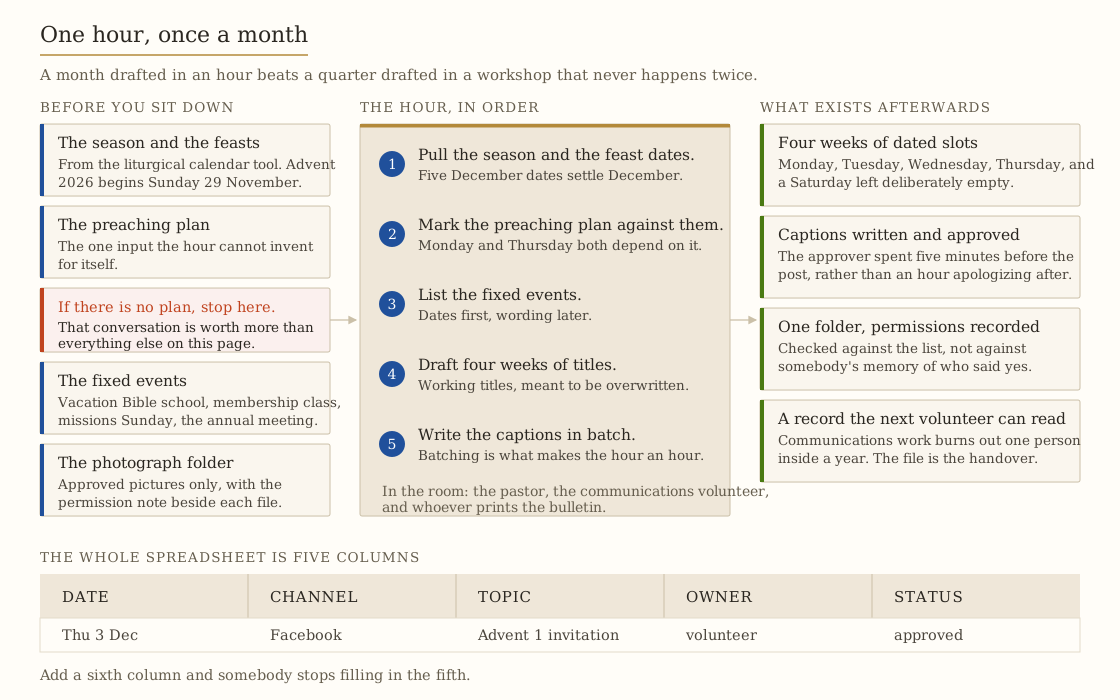
A month drafted in an hour is worth more than a quarter drafted in a workshop that never happens again.
What each channel is worth
Every channel has a job, and mixing them produces fatigue in the reader and burnout in the volunteer. The numbers below are the reason to keep them separate.
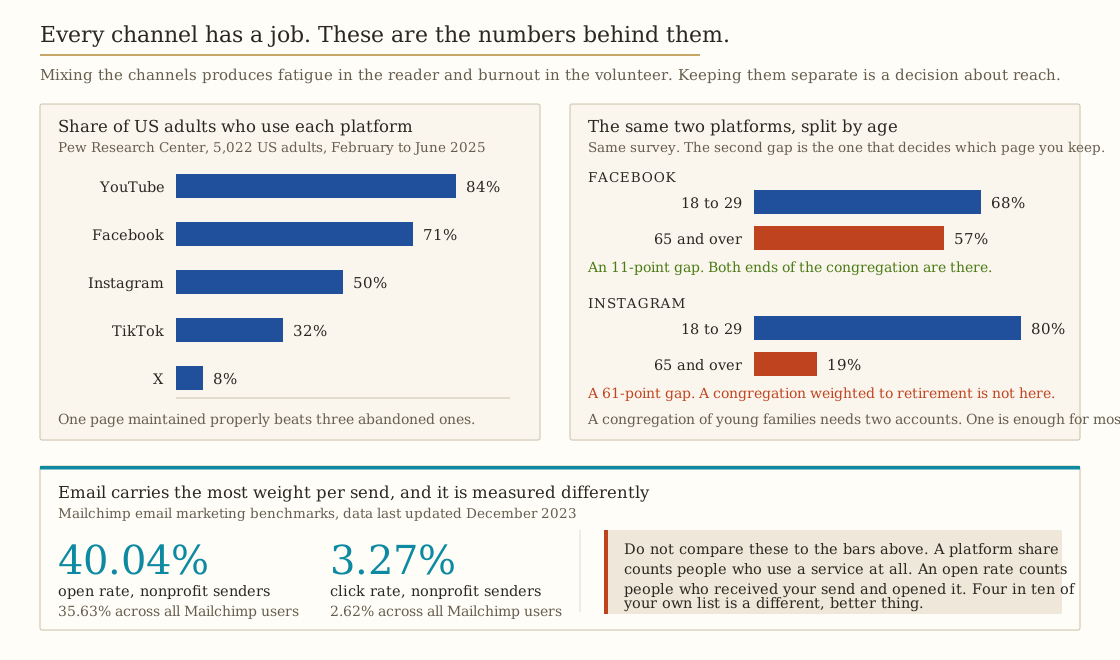
Email carries the most weight per send. Mailchimp’s email marketing benchmarks, last updated December 2023, put the average open rate across all users at 35.63 percent with a 2.62 percent click rate, and the nonprofit sector higher at 40.04 percent open and 3.27 percent click. Four in ten people who receive a church newsletter open it. Nothing else on this list performs like that, which is why the newsletter carries the pastoral note, the month ahead, and the prayer list rather than a link to a post.
Social reach depends on which platform, and on the age of your congregation. The Pew Research Center’s social media fact sheet, from a survey of 5,022 US adults fielded 5 February to 18 June 2025, records YouTube at 84 percent of US adults, Facebook at 71, Instagram at 50, TikTok at 32, and X at 8. Among adults 65 and over, Facebook holds 57 percent and Instagram 19. Among adults 18 to 29 the order reverses: Instagram 80, Facebook 68. One page maintained properly beats three abandoned ones, and the social post patterns are what goes in the box.
Text is for urgency and opt-in only. It reaches nearly everyone within minutes and costs the church its welcome if used for anything ordinary. See church texting for the registration and consent rules that decide whether the message arrives at all.
The bulletin is the authoritative record of the order of worship and the announcements. The website holds the stable facts: what the church believes, when it gathers, who leads it, and where the sermon archive lives.
The seasonal overlays, with the 2026 dates
The church year hands you most of the calendar a year in advance, which is the single largest advantage a church has over any business planning content.
Advent 2026 begins on Sunday 29 November, and the four Sundays fall on 29 November, 6 December, 13 December, and 20 December. Christmas Day is a Friday, per the Calendar of the Christian Year from The Lectionary Page. Put those five dates in the spreadsheet in August and the December scramble disappears.
- Advent. Publish the week’s reading and hymn before Christmas language takes over the feed. The Advent readings carry the passages and the candle themes.
- Christmas and Epiphany. Incarnation, and the light to the nations. Epiphany on 6 January is the most neglected date in the American church year and the easiest one to own.
- Lent. Give the congregation a psalm or a Gospel passage that leads toward the cross.
- Holy Week. State the service times plainly and let the text govern the words.
- Easter. Proclaim the resurrection without reducing it to a mood.
- Ordinary Time. Formation content: reading plans, catechism, group launches.
- Thanksgiving in the United States. Gratitude tied to providence rather than to abundance.
Pastor Appreciation Month, October in many American churches, deserves thanks without flattery. Say something true about the office of elder and the work it costs.
The clip that needs a license
A calendar that assigns “post a worship clip” is assigning a copyright decision to a volunteer, and that is where churches get muted.
The CCLI Church Copyright License covers printing lyrics, projecting them, arranging where no published version exists, and, in CCLI’s wording, “record and capture your worship services (audio and video) for archive or limited distribution to those unable to attend in person.” Public posting is not on that list. CCLI sells the Streaming License separately for it. If nobody has bought one, put the preaching in the calendar instead of the singing, because sermon audio over a still image carries no music rights problem at all.
Editorial rules
One post carries one purpose. Cite Scripture by chapter and verse. Use real photographs with permission on file. Never post a child’s name beside their face without written permission from a parent or guardian, and check the list before each post rather than trusting memory.
Do not turn a prayer request into bait for comments. Administrative detail belongs in the newsletter or a direct message when the public feed is the wrong room. Review the calendar in elders’ or staff meeting, remove cancelled events the same day, and keep a record of what was sent so the next volunteer can serve without guessing.
A sample four weeks
Adapt the names and dates. Week 1: Sunday invitation post, midweek study reminder, newsletter send on Tuesday. Week 2: sermon follow-up, prayer for an approved need, one photograph from hospitality. Week 3: event post if the event warrants one, memory verse, bulletin proofed by Thursday. Week 4: month-ahead preview in the newsletter, thanks to volunteers by name and with permission, quiet social week if the team is tired.
Measuring the right thing
Post count and engagement rate are the wrong scoreboard. A church that posted twice, and both posts helped a family find the service on a rainy Sunday, had a good month.
Review quarterly with an elder against three questions. Did we say anything untrue. Did we overwhelm people. Did Advent wait. Adjust the rhythm before adding a channel, because a new channel is a new volunteer commitment that nobody in the room has yet promised.
When the calendar breaks
Storms cancel services. Funerals rearrange the week. Posting nothing for three days while the church grieves is the right call, and silence beats tone-deaf promotion every time. Resume with facts: the time change, the funeral details, how to help the family. Then pick up the rhythm where it stopped rather than trying to backfill the missing posts.
Volunteer rotation
Communications work burns out one volunteer inside a year. Build a rotation of three: one drafts, one proofs, one approves. Train the backup before the primary leaves, not after. Keep the logins in a password manager owned by the church rather than in a personal email account, which is the single most common way a church loses its own page.
When the volunteer rotates off, the spreadsheet and the record of what was sent should survive without a handoff meeting that never gets scheduled.
Spreadsheets work for years. When you want scheduling built for churches, join posting early access. Planned free tier: up to three social accounts when the app launches.
Sources
- Mailchimp, Email Marketing Benchmarks and Statistics by Industry, data last updated December 2023. Checked 29 July 2026.
- Pew Research Center, Social Media Fact Sheet, survey of 5,022 US adults fielded 5 February to 18 June 2025. Checked 29 July 2026.
- The Lectionary Page, Calendar of the Christian Year, 2026. Checked 29 July 2026.
- CCLI, Church Copyright License. Checked 29 July 2026.