
Communicating a building project without losing the room
Plan a church building announcement, explain the budget and keep the congregation informed with monthly progress reports.
On this page
- Sequence the announcement, smallest room first
- The numbers a congregation is owed on day one
- Build the project page before the announcement
- The six questions people ask in the parking lot
- What you are allowed to say about the money
- The monthly rhythm during construction
- What to photograph, and what to skip
- When it goes wrong, say so first
- After the opening
- The tone rule for the whole project
Building projects split churches over information: who knew what, when, and who found out from a rumor instead of from leadership. The construction is a contractor’s problem. The communication is yours, and it starts eighteen months before a shovel moves.
Sequence the announcement, smallest room first
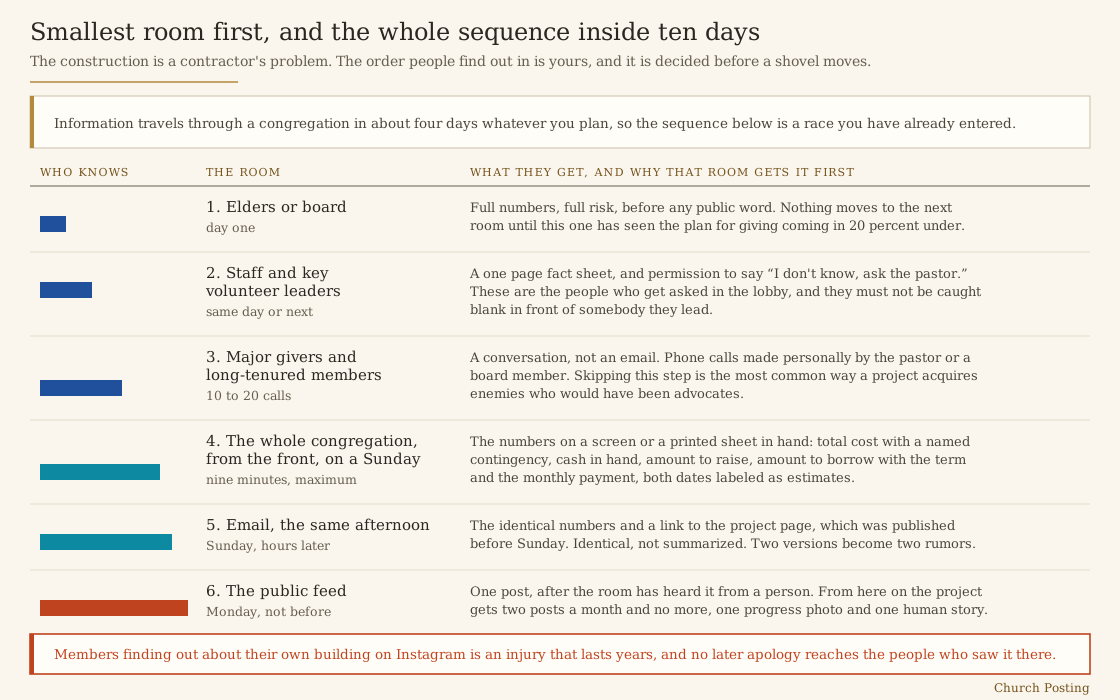
Information travels through a congregation in about four days regardless of what you plan. Get ahead of it by telling people in a deliberate order and by compressing the whole sequence into ten days or less.
- Elders or board. Full numbers, full risk, before any public word.
- Staff and key volunteer leaders. Same day or next. These people will be asked questions in the lobby and must not be caught blank. Give them a one page fact sheet and permission to say “I don’t know, ask the pastor.”
- Major givers and long-tenured members. A conversation, not an email. Ten to twenty phone calls made personally by the pastor or a board member. Skipping this step is the most common way a project acquires enemies who would have been advocates.
- The whole congregation, from the front, on a Sunday. Nine minutes maximum, with the numbers on a screen or a printed sheet in hand.
- Email the same afternoon, with the identical numbers and a link to the project page.
- The public feed, Monday. Not before the congregation has heard it. Members finding out about their own building on Instagram is an injury that lasts years.
The numbers a congregation is owed on day one
Vague announcements read as concealment even when nothing is being concealed. Publish these on the first Sunday:
- Total project cost, including a named contingency percentage
- Amount already in hand
- Amount to be raised
- Amount to be borrowed, the term, and the monthly payment
- What that monthly payment equals as a share of current annual giving
- The date construction starts and the date the building opens, both labeled as estimates
- What happens to the current space during construction, including where kids meet
- What gets cut or delayed if giving comes in 20 percent under target
That last line buys more trust than any rendering. A congregation told in advance what the downside plan is will forgive a downside. A congregation surprised by one will not.
Build the project page before the announcement
One page on the church website, live before the Sunday announcement, linked from every future post and email. It holds:
- The same numbers from the announcement, updated monthly with a “last updated” date
- Renderings and the floor plan, marked “concept, subject to change” when they are
- The FAQ, written from real questions
- Who to ask, by name, with an email address that a person reads
- A short update log, newest first, so people can catch up in ninety seconds
One page with a visible last-updated date does more for trust than a dozen enthusiastic posts.
This is the top of that page for a made-up church. The date, the money and the next step are all in view without a scroll.
Fellowship hall addition. Last updated October 12.
Budget $1,900,000. Pledged and given so far $1,120,000. We break ground when $1,500,000 is in hand.
Next step: the congregation votes on the contractor Sunday, November 8, after the service.
Questions? Ask Ruth Ellis, building committee chair, at 555-0100.
The six questions people ask in the parking lot
Write the honest answer to each of these before the first announcement. They are coming regardless.
- Are we going into debt, and how much? Give the number, the term, and the monthly payment.
- Will this cut the missions budget or staff? Answer plainly. If the answer is yes, say so now rather than in month nine.
- What happens to the old sanctuary or the space I love? People grieve rooms. Name what changes.
- Where will my kids meet during construction? Parents decide their attendance on this answer.
- Who decided, and how? Name the process, the vote, and the date.
- What if we do not raise it? Give the trigger point and the fallback plan.
Publish these as the FAQ. Update it every time a new question surfaces twice.
What you are allowed to say about the money
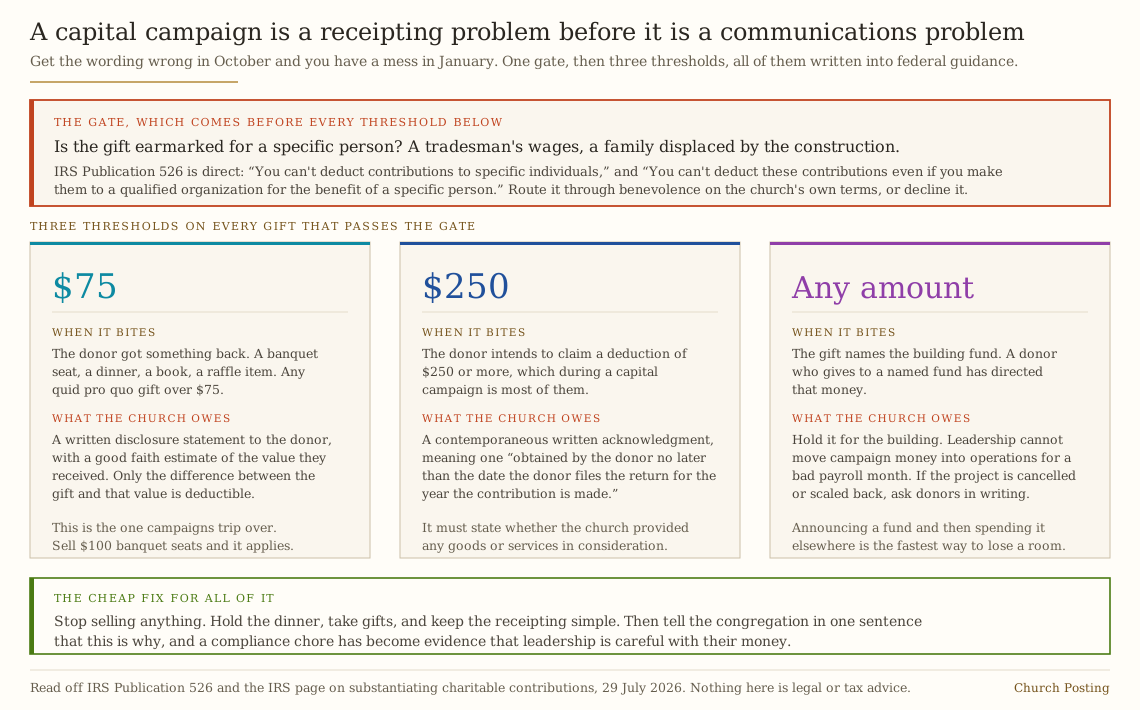
A capital campaign is a receipting problem before it is a communications problem, and getting the wording wrong in October creates a mess in January.
Building fund gifts are restricted to the building. A donor who gives to a named fund has directed that money, and the church holds it for that purpose. This is also why leadership cannot quietly move campaign money into operations when a payroll month goes badly. If the project is cancelled or scaled back, say so and ask donors in writing what they want done with their gift. Announcing a fund and then spending it elsewhere is the fastest way to turn a building project into a congregational meeting nobody enjoys.
Gifts earmarked for a person are a different thing entirely and are not deductible. IRS Publication 526 is direct: “You can’t deduct contributions to specific individuals,” and “You can’t deduct these contributions even if you make them to a qualified organization for the benefit of a specific person” (IRS, Publication 526). This comes up during a build when someone wants to fund a specific tradesman’s wages or route money to a family displaced by construction. Route it through benevolence on the church’s own terms or decline it, and never issue a receipt implying a deduction the donor does not have.
The $250 line and the $75 line. A donor claiming a deduction of $250 or more must obtain a contemporaneous written acknowledgment from the church, contemporaneous meaning “obtained by the donor no later than the date the donor files the return for the year the contribution is made.” The acknowledgment “must state whether the donee provides any goods or services in consideration for the contribution,” with a good faith estimate of value where it does. Separately, the church “must provide a written disclosure statement to donors of a quid pro quo contribution in excess of $75” (IRS, Substantiating charitable contributions).
That second rule is the one campaigns trip over. Sell $100 seats at a fundraising banquet and the church owes each buyer a written statement estimating the value of the dinner they received, because only the difference is deductible. The cheap fix is to stop selling anything. Hold the dinner, take gifts, and keep the receipting simple. Tell the congregation that is why you are doing it, in one sentence, and you have turned a compliance chore into evidence that leadership is careful.
Price the giving mechanics before the campaign opens rather than after, using what giving platforms cost your church. A campaign that routes $600,000 through card processing at 2.9 percent instead of bank transfer hands roughly $17,000 to a processor, which is a visible fraction of a children’s wing.
The monthly rhythm during construction
Pick one recurring slot and hold it for the entire project. Missing a monthly update is read as bad news, even when nothing is wrong.
- Same Sunday every month, three minutes from the front. Dollars raised, dollars spent, what changed, what is next, one honest problem.
- The same content in the newsletter that week. See church newsletter templates for a structure that keeps it short.
- Two posts a month on social. One progress photo, one human story. Do not exceed this. A feed that becomes a fundraising channel loses everyone who is not giving.
- Text only for genuine logistics. Parking lot closed Sunday, entrance moved, kids meeting in the gym. Texting is for information people need before they get in the car. See church texting for the consent rules, and church texting services if an eighteen-month project is the thing that finally makes you buy a platform.
What to photograph, and what to skip
Progress photography is the one part of this that works well on a public feed, because a building visibly changing is genuinely interesting to people who do not attend.
Worth shooting: the same wide angle from the same spot every month, so the sequence stacks. Steel going up. Concrete pour day. A framed doorway with a person standing in it for scale. Volunteers in work clothes on demolition day. The first children’s room with the floor going in.
Skip: renderings posted repeatedly as if they were progress, empty dirt lots, a shovel in a pile of soil with eleven people in suits holding it, and any photo captioned with a giving link. Post the photo. Let it be a photo.
Caption every progress photo with a fact: what this room will be, when it is expected to be usable, and how much of the project it represents. A caption written in November still reads correctly in March.
When it goes wrong, say so first
Delays and overruns are normal. Every project has at least one. The congregation hears bad news from leadership before they hear it from a subcontractor’s truck sitting idle in the lot for three weeks.
When the cost rises, publish the new number, the reason, and the plan, in that order, in the same channels used for the good news. When the timeline slips, publish the new date and stop giving dates you cannot hold. Two missed dates in a row and people stop believing every announcement you make, including the ones about worship.
Never fix a communication problem with more enthusiasm. Fix it with a number and a date.
After the opening
The building opens and the communication does not stop. For twelve months after occupancy, keep publishing the debt balance and the monthly payment in the same place as the giving update. A congregation that watches the balance fall stays engaged with the commitment they made. A congregation that never hears the number again assumes the project ended, and giving reverts to pre-campaign levels while the payment does not.
One line in the newsletter each month is enough: balance, payment, months remaining.
The tone rule for the whole project
The building exists to house the gathering. Every announcement should be readable as ordinary stewardship: rooms, roofs, doors, and dollars. When the language starts to sound like a legacy campaign, a movement, or a destiny, people who are being asked for money stop hearing a church and start hearing a pitch.
Say what it costs, what it does, and when it opens, then go back to preaching.
One more discipline for the eighteen months before the shovel. A building is sized for a congregation, so know the size of yours before you commit to a payment, using the counting method in measuring church attendance honestly. A frequency ratio that has been falling for two years while head count held flat is the exact condition under which a church builds a room it cannot fill. Then check what the calendar is already asking of the same volunteers you are about to ask for demolition days, using what fills a church calendar.
Sources
- IRS, Substantiating charitable contributions, the $250 contemporaneous written acknowledgment and the $75 quid pro quo disclosure. Checked 29 July 2026.
- IRS, Publication 526, Charitable Contributions, contributions to specific individuals and earmarked gifts. Checked 29 July 2026.
Two sources this post wanted and did not get. The Bureau of Labor Statistics producer price index release returned HTTP 403, so no construction cost escalation figure is quoted here. No church lender’s published debt guideline was reachable either, so this post states no rule of thumb for what share of annual giving a mortgage payment should consume. Ask your own lender for their underwriting ratio in writing and publish it alongside the payment.
Church Facilities Manager jobs
Churches have 21 open church facilities managerjobs on Church Posting , including Facilities Assistant at Mitchell Road Presbyterian Church and Maintenance Manager at Second Presbyterian Church .
More on outreach
All outreach articlesChurch Job Descriptions: How to Write One, With Templates
How to write a church job description: templates for pastor, youth, worship, kids, office and tech roles, with data from 379 postings read Oct. 19, 2026.
Church Job Interview Questions: Candidates and Committees
Interview questions for church jobs, for candidates and search committees, with questions by role, a score sheet and the facts postings leave out.
Church Staff Salaries 2026: Pastors and Every Other Role
What churches pay pastors, youth, worship, kids, office and media staff, from 379 job postings read Oct. 19, 2026, BLS wages and denominational surveys.
The weekly email
Join the list for the weekly email of new articles, free tools and job postings. It has not started sending yet.